
Trace Clayton County Former Owners
Each transfer becomes its own row in your notes. Start with the latest deed the Clayton County Clerk of Superior Court accepted. Build a working table before touching older references. This keeps a repeated surname from being mistaken for the same parcel. A company name or newer street label can mislead too. The legal description and the book/page cross-reference serve as the thread. That thread holds every step to the land.
| Transfer Date | Grantor to Grantee | Deed Type | Book/Page |
|---|---|---|---|
| Newest recorded date | Prior owner to present grantee | As indexed | Copy exactly |
| Next earlier date | Earlier grantor to prior owner | As indexed | Follow cross-reference |
| Historic entry | Parties as written | Deed or estate instrument | Preserve citation |
The GSCCCA Real Estate Index is the county-facing online route into Clayton County deed records. The clerk states coverage of 1985 to current. That cutoff simply marks a boundary. A Clayton property search may need to shift toward deed books or microfilm there. It does not confirm that every later image is present online.
Clayton's 1985 Online Cutoff
The Clayton Clerk describes real-estate search coverage as 1985 to current. GSCCCA's central index lists a 1990 start. That statewide display should not override the county statement. Mark each source and its range separately. For owners further back, ask the Real Estate Division which deed book and index you need. The clerk sits at the Harold R. Banke Justice Center in Jonesboro and lists 770-477-3395. eCertification is available for eligible real-estate records. An in-person request still helps when an image is not online.
Online limit. Clayton publishes 1985 to current search coverage; investigate older owners through deed books, microfilm, and archive finding aids.
Clayton Name Variants and Roles
Search each owner as grantee first. That shows when the land was acquired. Then run the same name as grantor. That second pass shows when the land left that party's ownership. GSCCCA indexing draws names from captions, opening text, signatures, and variants, so test name order, middle initials, entity suffixes, married names, and spacing. Open the official grantor-grantee form with a wide date range, then narrow by Clayton County and instrument type. A matching name is only a lead. Confirm it through the subdivision, land lot, district, legal description, or book/page link.
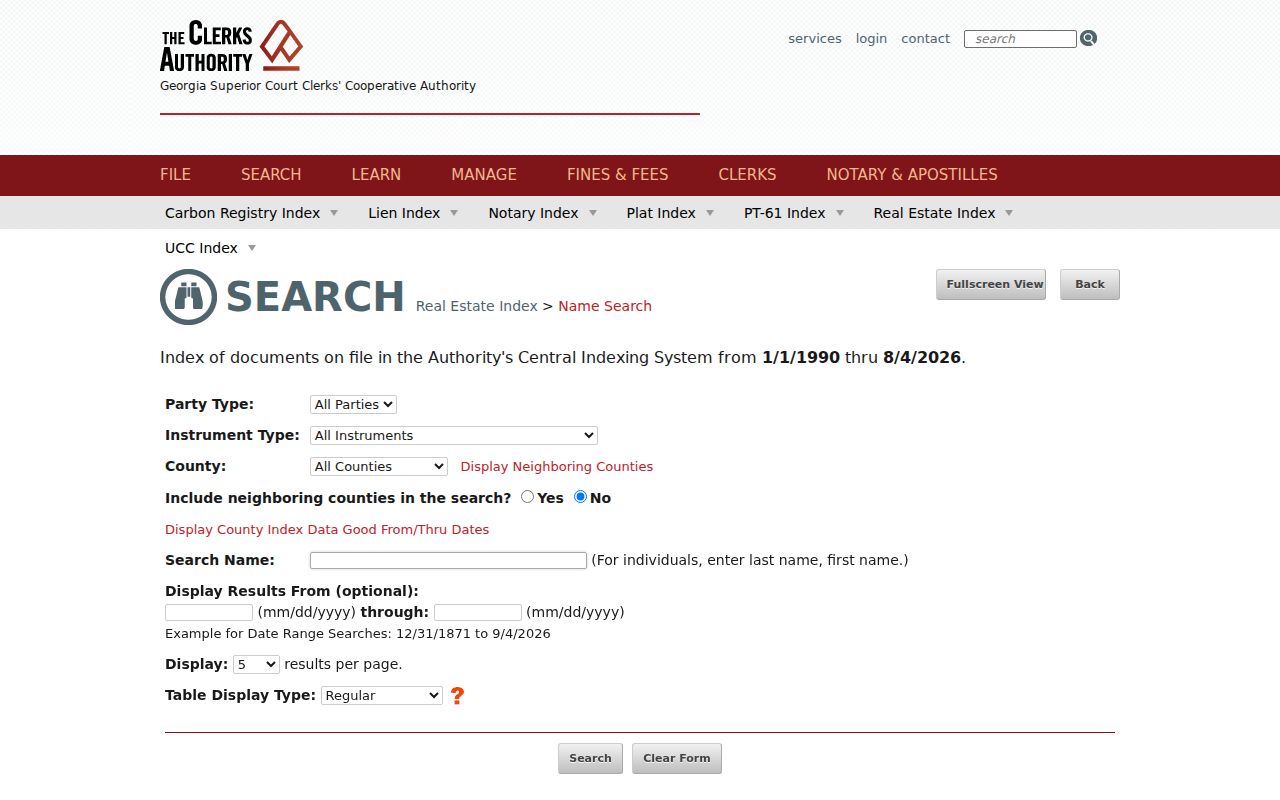
The deed anchors each name to the land.
Read Clayton's Deed Chain Backward
Start with the current deed. Its grantor is the prior owner you search next. Repeat that handoff, logging the deed type, document date, recording date, book, page, and parties at every step. A corrective or quitclaim deed can alter part of the record without an ordinary sale, so label it with the instrument type shown.
- Find the newest deed with the present owner as grantee and verify the land description.
- Copy its grantor. Search that name as an earlier grantee to find the acquisition deed.
- Repeat one transfer at a time, carrying book/page and plat references.
- At the online limit, take the last sound citation to deed books or microfilm.
- Grantor
- The party conveying an interest.
- Grantee
- The party receiving the stated interest.
- Chain of title
- The ordered sequence of instruments tied to the land.
- Reverse index
- An index used to trace earlier transfers by party.
- Quitclaim and warranty deeds
- Different forms whose effect must be read from each instrument.
Clayton Plats Anchor Prior Owners
A street address can be newer than the chain itself. A plat often holds the missing link to a chain. It can name a subdivision, phase, lot, block, land lot, or district. GSCCCA plat search offers county, name, section or GMD, district, land lot, and date controls. Subdivision names like Stoney Creek Estates and Avalon Estates are useful leads. Only the recorded plat settles the formal wording. So copy every plat citation you find in a deed. A split or combination explains an older tract's odd shape. The tract may not map cleanly onto today's PIN because of it. GIS helps with orientation. The deed and plat still carry the recorded description.
Probate Transfers in Clayton Chains
A death can break the simple seller-to-buyer pattern. Clayton Probate Court may hold a will, letters, year's support, or estate action filed before a later executor's, administrator's, heir's, or surviving owner's deed. The online estate route works from a name plus deceased-date or filed-date ranges. The index does not image every pleading. Estate indexes can also be checked in person for free. Pair the probate case with the deed index. Neither alone proves that a relative received this parcel.
Morrow Archives Extend Clayton History
The Georgia Archives moved to Morrow in 2003. Its County Records Microfilm Index and courthouse-history cards point toward older county runs, and its death-record guide lists Clayton material from 1875. That family source supports a name trail. It cannot replace a deed. The Georgia Archives catalog serves as a practical fallback once the online chain ends. Note the collection and reel or volume, then confirm access, since a finding aid is not itself an ownership record.
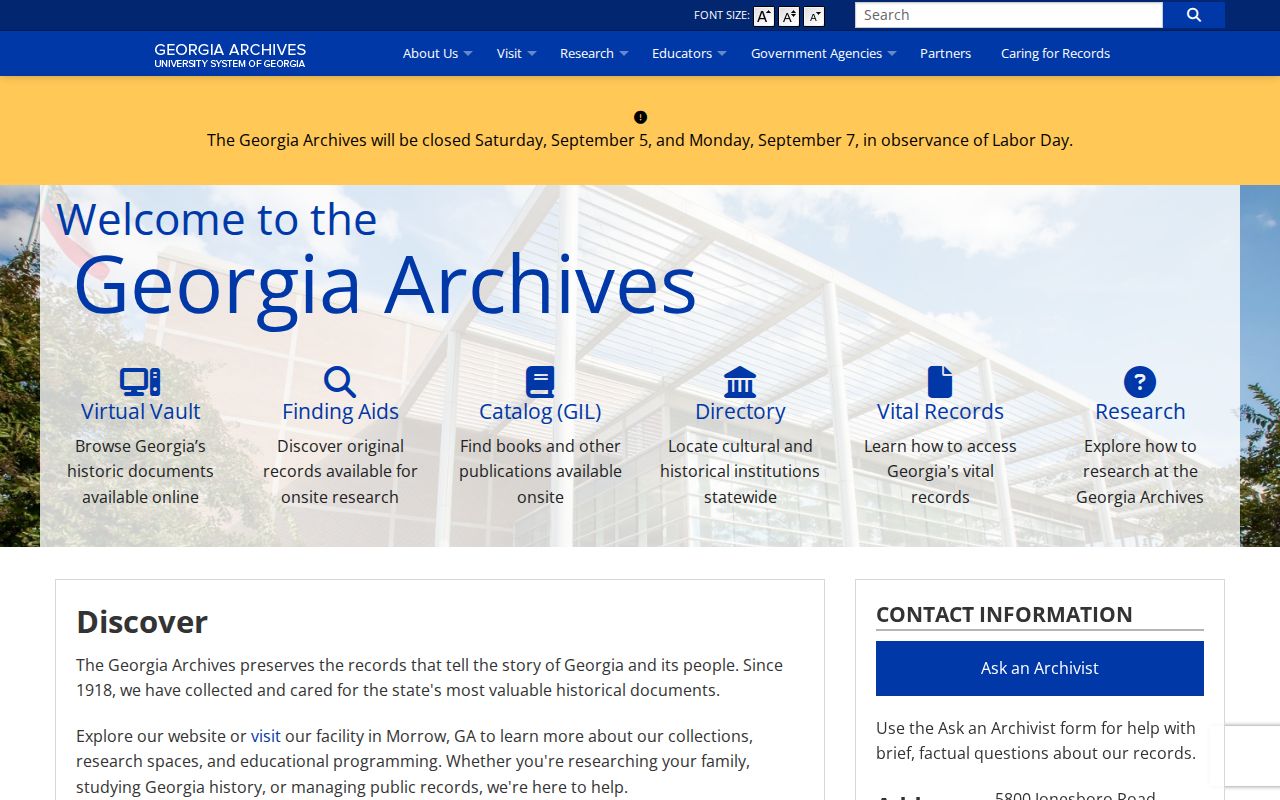
The catalog helps locate a source; the cited deed book remains the evidence.
Book and Page Preserve Clayton Chains
Book and page references outlast street labels. The GSCCCA book/page form asks for county, book, and page. A citation in one deed opens the next source without another name guess. Keep instrument numbers too when they are supplied. Security deeds, cancellations, releases, easements, liens, and plats can sit beside transfers. They may clarify the land record. Not all of them change the owner of record. Keep the former-owner timeline to instruments that affect the ownership path, and note related filings separately.
Log every unresolved name variant and skipped year on the worksheet too. That audit trail stops silence in one index from being read as proof that no transfer occurred.
How Far Clayton Ownership Goes
Clayton County dates to 1858, so tracing owners that far back takes patience. Records from the earliest decades live mainly in county books, microfilm, plats, and archive indexes. The GSCCCA brought its central index online in 1999. It began reindexing older deed records in 2002. Even strong web coverage leaves gaps, though. Verify each link in the chain of title yourself. When a document is missing, request the index, book, or image by party name, citation, parcel number, and date range. Never guess at a missing deed. Note the last confirmed owner of record and the span still unresolved.
Lawful use. Prior-owner records support house history, estate work, and purchase diligence. Never use them to track, harass, intimidate, or harm a living person.